


25 styczeń 2026
Porcelain or stoneware? How to spot truly well-made handmade ceramics?
Read more
17 listopad 2025
Handmade ceramics don’t ask for ritual – they ask for attention. The pieces we create at MUAS, like most high-fired stoneware and porcelain, are made to work. They’re built for morning coffee, evening meals, and the honest wear of daily life. This guide explains how to keep them intact and beautiful without turning care into ceremony.
Not all ceramics are fired equally. Many studio pieces – especially those made by hobbyists or smaller workshops – mature around 1200°C or lower. At MUAS, we fire at approximately 1260°C. At that temperature, both stoneware and porcelain become fully vitrified: dense, non-porous, and structurally stable enough to handle heat, moisture, and regular washing cycles without compromising their integrity.
This higher firing temperature is what sets professional-grade ceramics apart. The material becomes harder, more resistant to thermal stress, and less prone to chipping or staining. Our collections are made to be used, not preserved – and they’re built to last because of how they’re fired.
Ceramics crack from sudden thermal stress, not from use. The material can tolerate high temperatures, but it struggles with rapid change.
The most common scenarios: pouring boiling water into a cold cup, moving a hot dish directly from the oven to a cold stone counter, or placing frozen ceramics straight into heat. One real example: a cup left on a windowsill during winter, then filled with boiling water – the extreme temperature difference caused an instant crack.
Allow temperature to shift gradually. Warm the vessel first if needed, or let it cool naturally before contact with cold surfaces. Avoid leaving ceramics in places where they’ll become unusually cold or hot. This single habit prevents most structural damage.
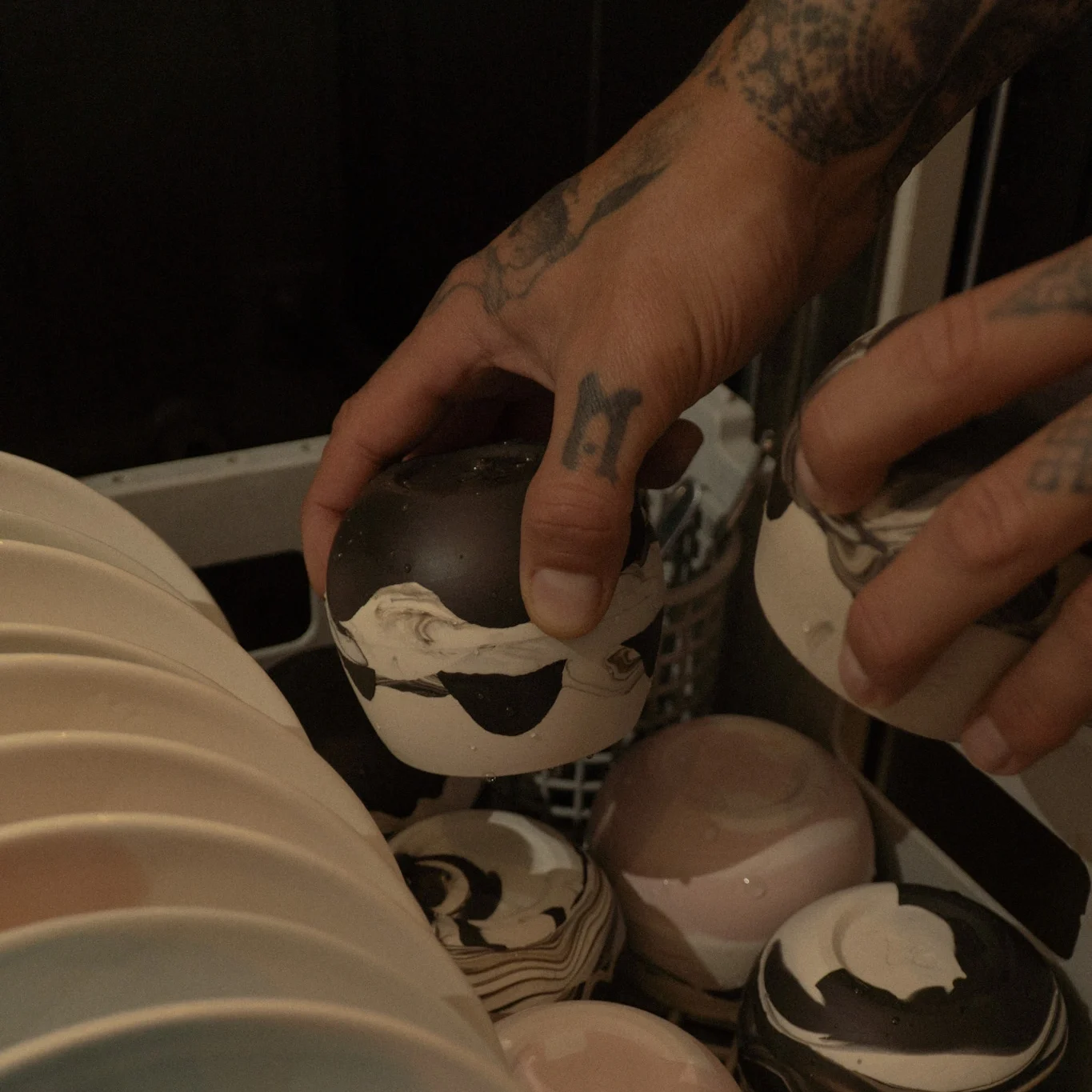
High-fired stoneware and porcelain are dishwasher safe, including every piece we make at MUAS. If you want to protect matte glazes or preserve softer finishes, choose a mild detergent and avoid abrasive scrubbing pads.
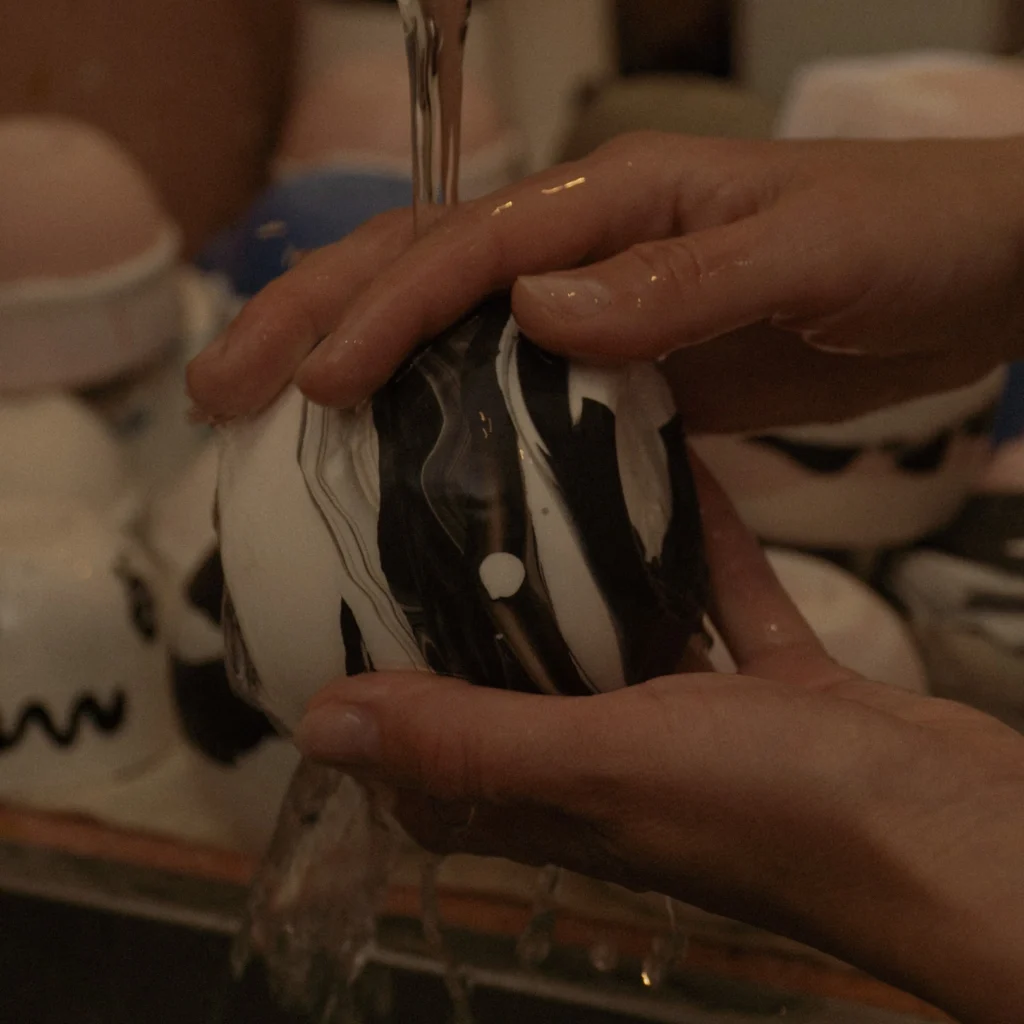
The best way to extend the life of any ceramic piece is simple: rinse it with water right after use. Food and liquids don’t have time to set, stains don’t develop, and the surface stays cleaner with less effort. It’s a small ritual that makes a real difference.
For regular cleaning, use a soft sponge or brush rather than steel wool, skip harsh chemical cleaners, and place pieces gently when stacking – not out of fragility, but to avoid surface scratches. This is enough to maintain most handmade ceramics in excellent condition for years.
Tea and coffee stains lift easily with a baking soda paste or gentle cleaning cream. Metal marks from cutlery sometimes appear on matte glazes – they’re surface-level and disappear with light polishing.
Over time, some glazes may develop crazing: fine hairline patterns caused by repeated heating and cooling. It’s a natural part of ceramic aging. As long as the piece is fully glazed and high-fired, crazing doesn’t affect safety or function. Think of it as patina rather than damage – evidence of use and time.
This is where honesty matters. Functional repairs for ceramics are difficult, and most adhesives marketed as “food-safe” are not suitable for direct contact with hot liquids or acidic foods.
In practice, repaired pieces are usually decorative rather than functional. True food-contact-safe adhesives are rare and limited in their applications. Traditional or resin-based kintsugi is primarily an aesthetic repair, not a return to everyday use. We’ll cover repair methods in detail in a future article, so you know what’s possible – and what isn’t.
Handmade ceramics are meant to be used. Our bowls, cups, and plates are designed for the rhythms of daily routines – breakfast, coffee breaks, shared meals. When cared for with simple habits – gradual temperature changes, gentle washing, basic attention – they last for years and age beautifully.
Whether it’s MUAS stoneware, porcelain, or work from any studio around the world, well-fired handmade ceramics belong in everyday use. They’re made to be held, used, and remembered.