


17 listopad 2025
How to Care for Handmade Ceramics to Last for Years?
Read more
25 styczeń 2026
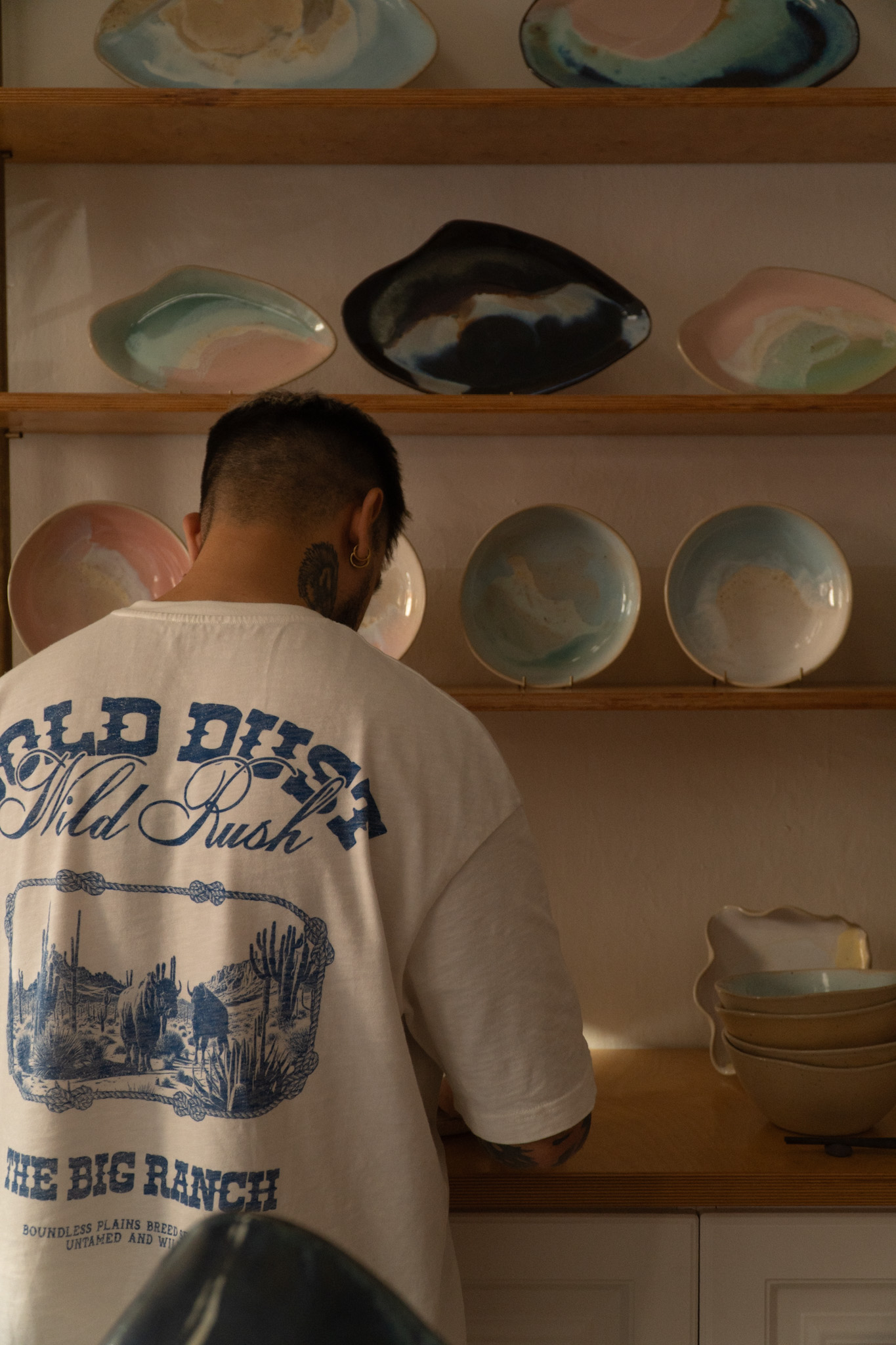
The amount of handmade ceramics available on the market today is enormous. Differences in the materials makers use, and in how those materials behave in everyday life, often go unnoticed at first glance. And yet it’s the small signals, the ones you can barely register in your hand and in your eye, that tell you what you’re really holding and how long a vessel will serve you well.
This text is a simple guide for people who buy ceramics at craft markets, studios, and galleries. Not to chase a flawless object with no trace of the hand, but to tell the difference between a conscious choice and a coincidence.
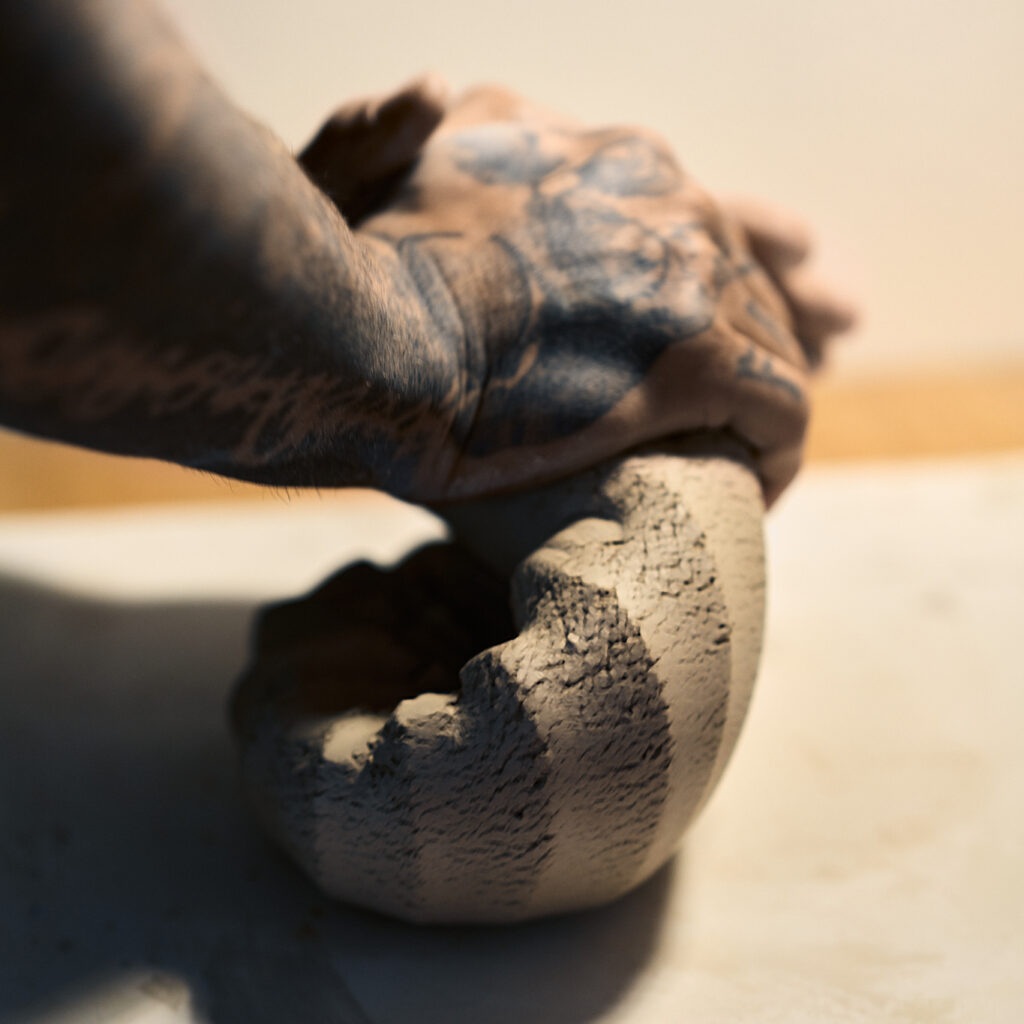
Weight, and how it relates to the object’s visual volume, is the first clue, but it’s worth remembering that what you feel in your hand also depends on wall thickness and the form itself. When properly fired, porcelain is usually the most compact and the least porous, which can be misleading because thin porcelain looks delicate. In practice, that very density is what allows you to make thin walls without losing strength. Stoneware more often has a heavier character and a clearer sense of weight, while low-fired ceramics can feel lighter and more “dry” to the touch, sometimes surprisingly light for their size, which usually goes hand in hand with a more porous body.
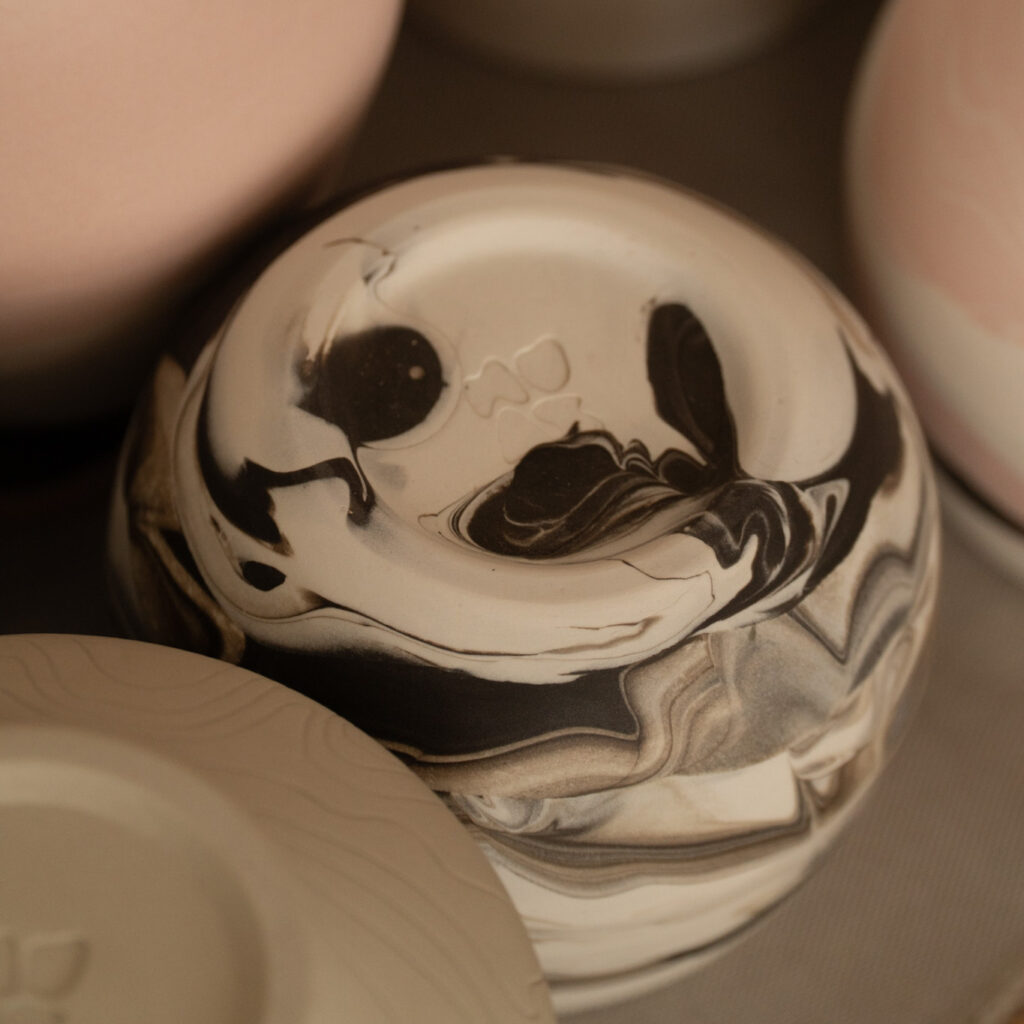
The base of a vessel, most often left unglazed on the foot ring, reveals the true nature of the material the fastest. Porcelain there is usually smooth, bright, clean, cool. Stoneware has a more earthy structure, sometimes with speckles and a gentle roughness resulting from additions to the clay, for example grog. Low-fired ceramics often remain the most porous to the touch. If the entire bottom is glazed, look for the edge of the foot ring or the point where it meets the table; that’s usually where you can still see the clay body. Light can be another clue: porcelain, as the only everyday ceramic material, can be translucent with a thin wall and a proper firing, while stoneware and low-melting clays generally won’t show that effect. Sound can help too. Porcelain usually rings bright and clear, stoneware lower but still full, and a dull, short sound can be a sign of a lower firing or higher porosity, although the shape and thickness of the vessel always matter.
A fine network of tiny glaze cracks can be an intentional decorative choice, meant to read like a drawing on the surface, designed as part of the object’s character. Sometimes it’s called a crackle effect, and the cracks themselves may be described as crazing. The problem begins when those cracks appear on functional pieces glazed in solid, uniform colors. Most often it means the glaze doesn’t match the clay body, or the firing was too low. You don’t always see it right away. It often shows up only after a few uses, when pigments from coffee, tea, or food start settling into the lines and form a grey web that can’t be aesthetically undone.
Pinholes or small craters in the glaze don’t automatically disqualify a functional piece. What matters is whether the surface inside that spot stays glassy and sealed, or turns matte and dry, which can suggest a less tight area. It’s also worth telling a network of fine cracks (crazing) from one long, straight line. A straight line, especially if you can feel it with a fingernail, more often points to a crack in the structure of the vessel, or the beginning of one. This kind of flaw can be unavoidable in a small percentage of handmade work, but in everyday use it usually ends with the crack deepening or the piece losing its seal.
How a vessel behaves after months and years depends on how mature the firing is, and on how well the glaze is matched to the body. A higher firing usually means lower absorption, but temperature alone isn’t the full answer; the entire process matters. In practice, firing above about 1150°C often goes hand in hand with higher durability and better resistance in everyday washing, but whether something is dishwasher- or microwave-safe also depends on the glaze, the type and technique of decoration, and the form. That’s why an honest, precise answer from the maker matters more than a number on a label.
For functional ware, the basics are a food-safe glaze and a proper firing. At MUAS we do not use glazes containing lead or cadmium, and every object is designed for real use. If you’re looking for pieces meant to live with you daily rather than sit on a shelf, see our collections in the shop: shop.muas.pl, and if you want to go straight to specifics, visit cups and bowls, bowls, and plates.
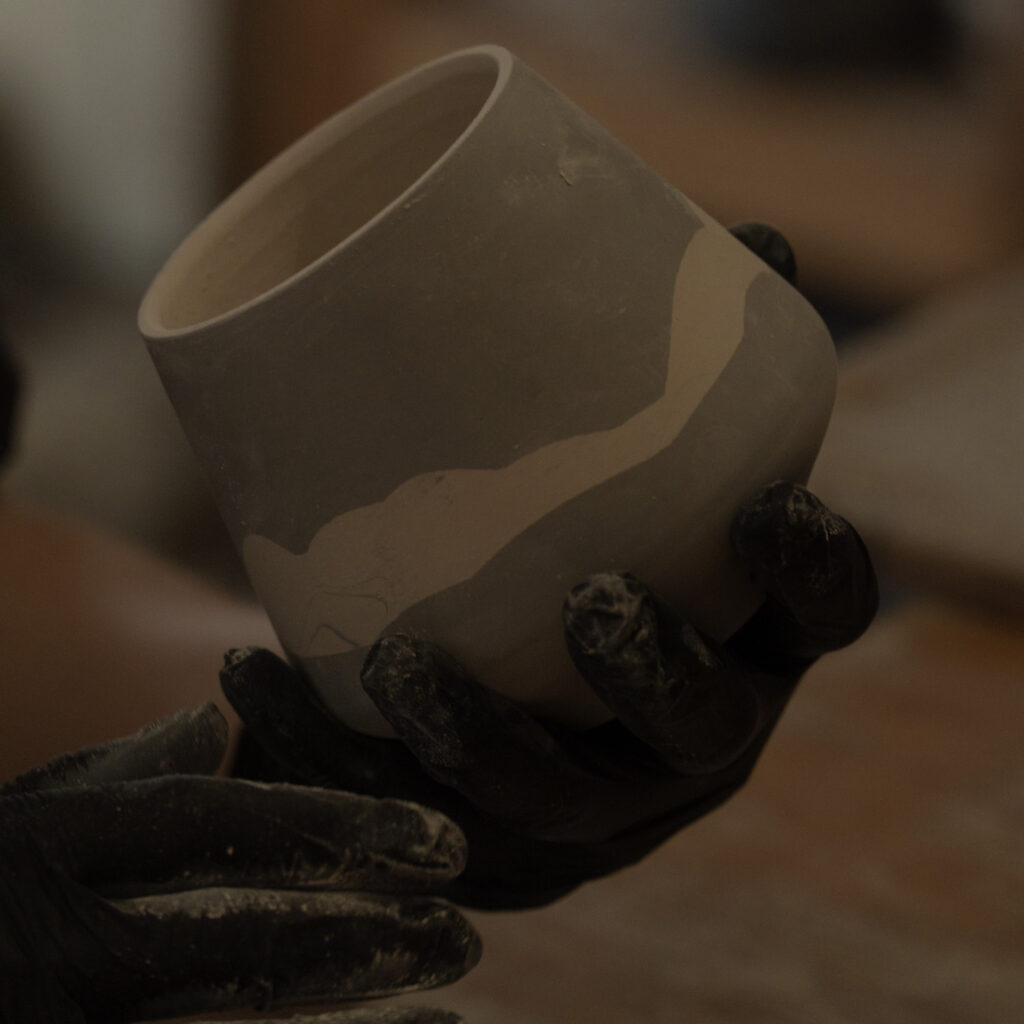
Details reveal whether the maker truly carries the process correctly from start to finish. A foot ring says the most. Its finish is often overlooked by beginners and hobbyists. It should be smoothly sanded, without sharp edges or protruding, uneven fragments that will absolutely leave marks on furniture. The rims of vessels should have an even thickness, smoothed along their entire length, with no roughness you can feel. This matters enormously with tea bowls and mugs, because it changes how the piece feels on the lips, and lips are sensitive, full of nerve endings. Handles are a separate subject and another place worth focusing on. It’s there that you can easily spot tiny cracks that show whether the handle was attached properly. Natural variation and imperfections are part of handmade ceramics and their character, but if within one series you find drastic differences in proportions, thickness, or glaze, it’s usually a sign the maker doesn’t fully control the material and the process.
At markets, what matters most is often not the answer itself, but the way it’s given. A good studio doesn’t need to hide behind vague phrases, because it knows its materials and techniques. Firing temperature, whether the glaze is food-safe, and guidance on the dishwasher and microwave are not difficult questions, and the answers should come calmly and clearly, without hesitation. If you sense the maker can’t speak confidently about their process, treat it as a warning sign, especially with pieces meant for eating and drinking. Well-made ceramics don’t need a story. They hold their own.
And when you get home with a new piece, in our previous article you’ll find a few simple habits that truly make a difference in how to care for handmade ceramics so they last for years.